Rosa Carter · 23 October 2026
Synchronization Techniques for Maintaining Data Integrity Across Geographically Dispersed Cache Nodes
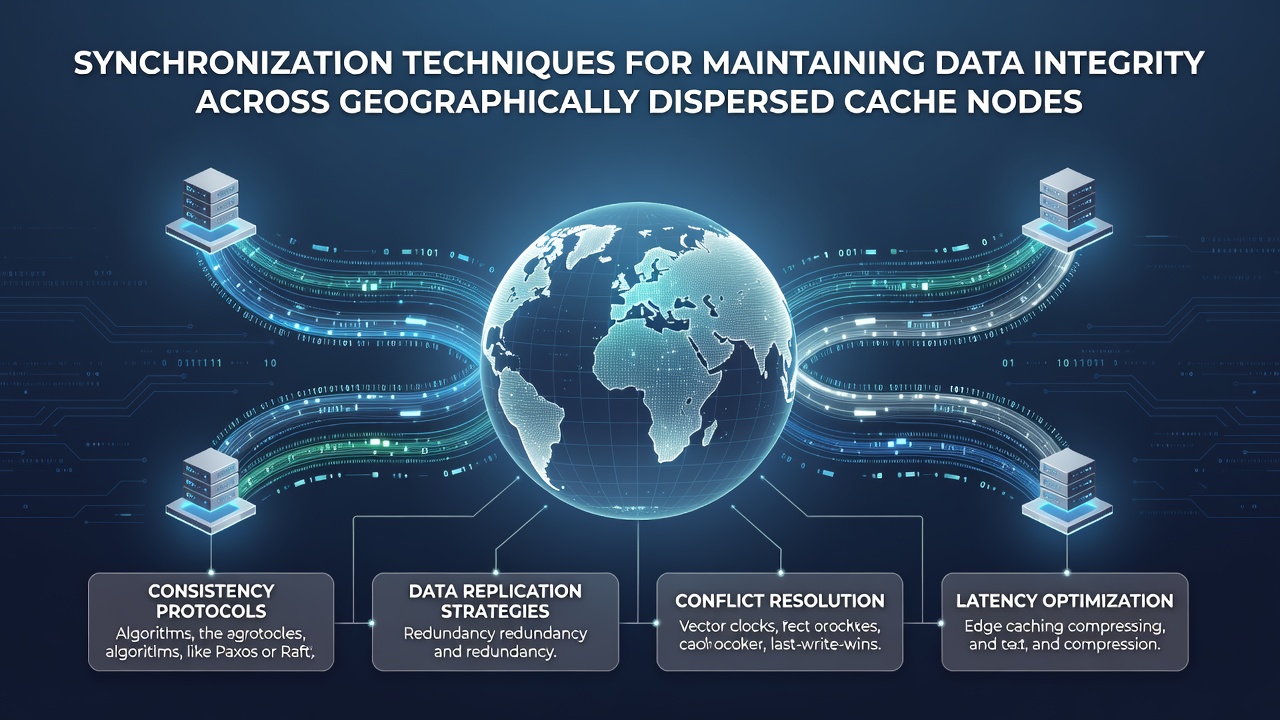
Geographically dispersed cache nodes form the backbone of many large-scale data systems, yet keeping information consistent across distant locations requires precise coordination methods that account for network delays, node failures, and concurrent updates. Researchers have documented how these environments must balance speed with accuracy, because any mismatch can lead to incorrect query results or lost transactions.
Core Challenges in Distributed Cache Environments
Network partitions separate nodes for extended periods while high latency between continents stretches communication times beyond acceptable thresholds for real-time applications. Data shows that even brief outages force systems to decide whether to accept stale reads or block operations until reconciliation completes, and studies from multiple institutions confirm that these trade-offs grow more pronounced as node counts increase across continents.
Concurrent writes from different regions create version conflicts that demand detection mechanisms capable of ordering events without a single global clock. Observers note that vector clocks and similar logical timestamping approaches help identify which update occurred first, although they add overhead to every operation that travels between sites.
Established Synchronization Protocols
Quorum-based systems require a majority of nodes to acknowledge a write before considering it committed, which reduces the risk of divergent copies while still allowing progress when some locations remain unreachable. According to findings published by the National Institute of Standards and Technology, properly sized quorums improve integrity without sacrificing all availability during regional disruptions.
Gossip protocols spread updates through randomized peer exchanges rather than centralized broadcasts, and evidence from production deployments indicates this approach scales efficiently because each node only contacts a small subset of peers at any moment. Merkle trees further accelerate reconciliation by letting nodes compare compact summaries of their data sets before transferring only the differing portions.
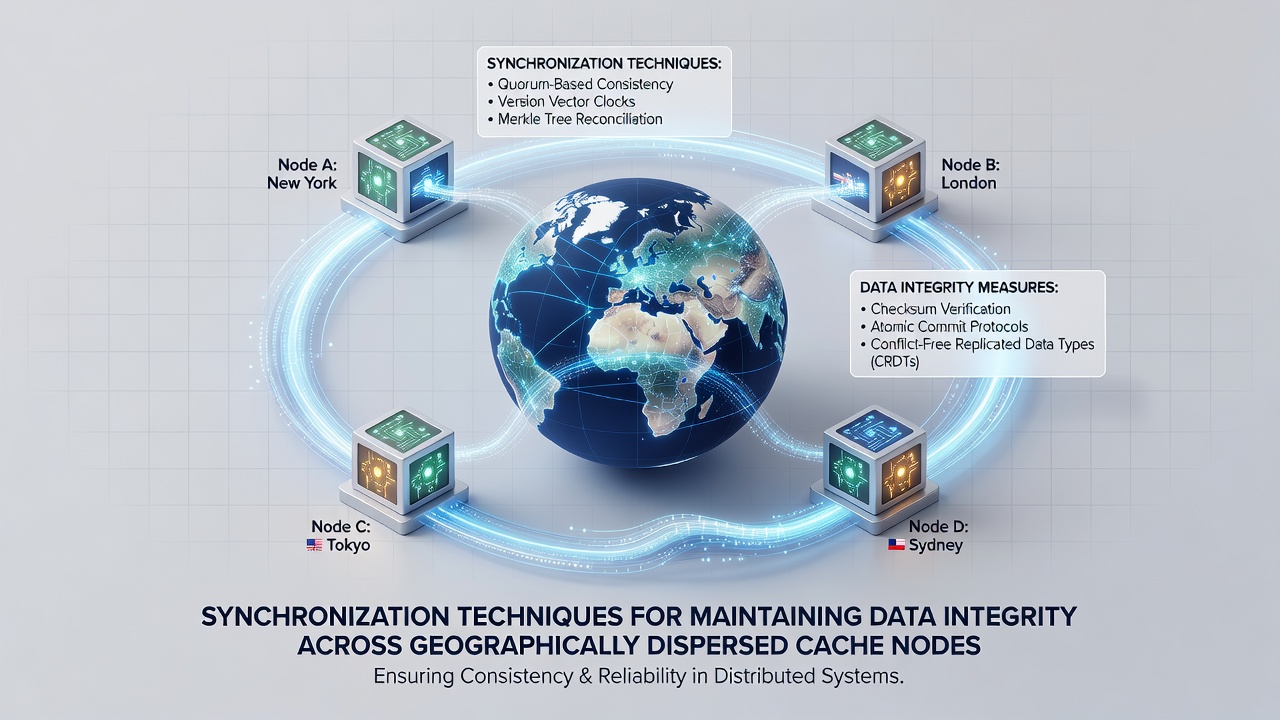
Conflict-free replicated data types, known as CRDTs, permit independent modifications at each site that later merge automatically without coordination, and reports from academic groups in Canada and Australia show these structures suit use cases where eventual consistency meets application needs. Two-phase commit protocols enforce stronger guarantees by requiring all participating nodes to prepare and then commit in lockstep, although the blocking behavior during coordinator failure limits their use in wide-area settings.
Recent Developments and October 2026 Observations
In October 2026 several research teams presented updated measurements on hybrid approaches that combine quorum reads with CRDT writes for mixed workloads. Those findings revealed measurable reductions in reconciliation traffic when systems detect read-heavy versus write-heavy patterns and adjust their synchronization strategy accordingly.
Industry reports also highlight the growing adoption of automated consistency checkers that run periodic background scans across regions, catching silent divergences that escape normal update paths. Data from European research consortia demonstrates that such background processes can operate within tight bandwidth budgets when they prioritize high-churn data sets first.
Practical Considerations for Implementation
Administrators must select consistency levels per data type rather than applying one policy everywhere, because financial ledgers demand stronger guarantees than user preference caches. Configuration files that encode these choices allow operators to tune behavior without code changes, and documentation from multiple vendors shows this flexibility prevents over-engineering in most deployments.
Monitoring tools track metrics such as reconciliation latency and conflict resolution rates, giving teams visibility into whether current techniques still meet service-level objectives as traffic patterns shift. When thresholds are crossed, automated alerts trigger deeper analysis before users notice anomalies.
Conclusion
Synchronization techniques for dispersed cache nodes continue to evolve as hardware capabilities and workload demands change, with established methods like quorums and gossip protocols forming the foundation while newer hybrids address specific pain points. Organizations that match protocol choice to data sensitivity and access patterns achieve reliable integrity without unnecessary performance penalties, and ongoing measurements keep these systems aligned with real-world conditions across global infrastructures.